

Result 13
1-13
Tokoname’s pottery has endured for more than 1,000 years and has shaped the city’s history, economy, and infrastructure. One of the best ways to learn about this heritage is to walk the Pottery Footpath (Yakimono Sanpomichi), which has two routes. Course A is 1.6 kilometers long and includes several of Tokoname’s most popular attractions, while Course B is 4 kilometers long and outlines the city’s pottery history. Both courses begin at Tokoname Tojiki Kaikan (Ceramics Hall), where visitors can find displays of Tokoname ware and helpful tourist information.
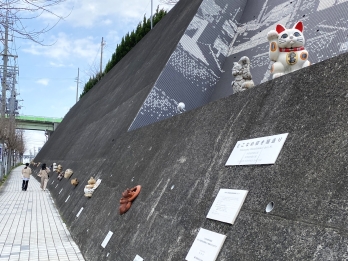
Tokonyan is the giant maneki neko (lucky cat) figure that peeks over an embankment halfway along Tokoname Maneki Neko-dori (Lucky Cat Street). The name “Tokonyan” is a combination of “Tokoname” and the meowing sound made by a cat (nyan) in Japanese. Since its creation in 2008, the statue has become a beloved symbol of the city and a popular subject for photographs.
The plaza adjacent to the brick Noborigama (Toei Kiln) is approximately halfway along Course A on the Pottery Footpath, making it an ideal place to take a break. The plaza’s main attractions are found in a two-story building, with a well-preserved example of a nineteenth-century kiln on the first floor and an exhibition space and studio above.
This is the site of the castle where Ogo, the mother of Tokugawa’s third shogun, Iemitsu, first married. There is now an observatory resembling a castle keep, offering a panoramic view of Ise Bay.
Denden-zaka is located on the south side of the Takita Family Residence.(Shipping Agent Takita House)
The hill was once called Denden-yama.
One story says the name came from the Takita family, who watched ships at the port and told the owner what they saw. That’s why it was called the “hill of news,” or Denden-yama.
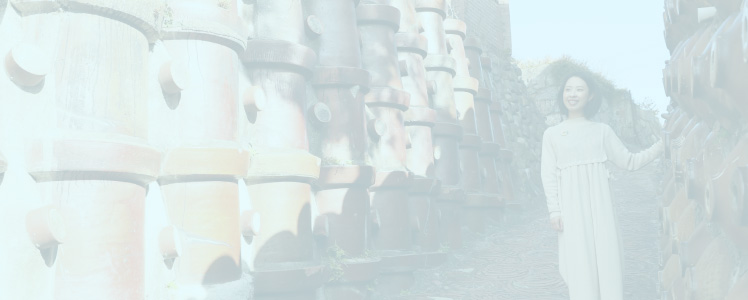
Along the slope, you can see many old pottery items.
The walls are covered with clay shochu bottles, and under the ground are “Kesawa,” which were used for firing clay pipes.
It’s a quiet place where you can enjoy the special feeling of a pottery town.
The Tokoname Tourist Information Center is conveniently located about 400 meters east of Meitetsu Tokoname Station.
Sightseeing brochures, Tokoname ware, local souvenirs, ice cream, and drinks are available at the center.
The facility also features the “TOKONAME Gallery” inside.
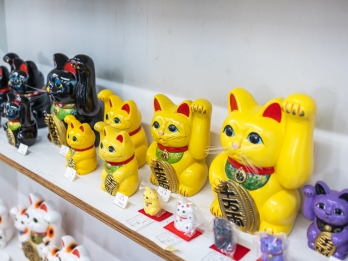
Tokoname is among the most prominent production centers for “manekineko”in Japan.
From Meitetsu Tokoname to the start point of the pottery trails there are 39 lucky manekineko and Tokonyan the guardian cat to welcome you.
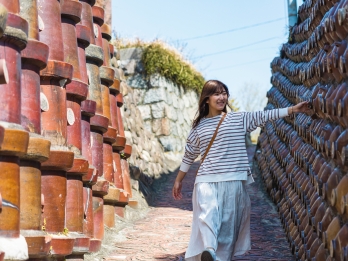
This hill path symbolizes the pottery trails.The walls consist of Meiji ere clay pipes and Showa era baked tiles with the path given grip with embedded fumiture create when firung clay pipes.
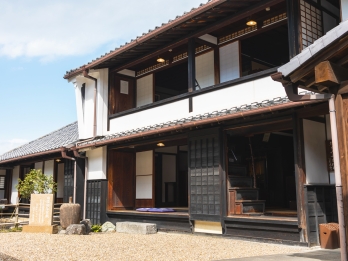
The Takita family, who ran one of Tokoname’s shipping agencies, built a residence facing Ise Bay in 1850, not long after starting their lucrative business. Their former home has been faithfully restored and offers a chance to learn about the family, their lifestyle, and their shipping business through its fine examples of period furniture, ceramics, and lacquerware. There are also informative displays explaining the development of local shipping history.
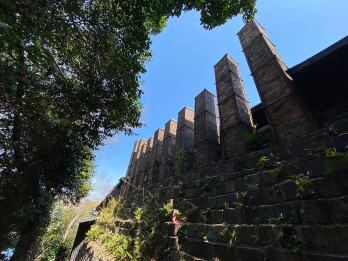
This impressive brick structure sits at an incline of 17 degrees on a hill along Course A on the Pottery Footpath. It is Tokoname’s last “climbing kiln” (noborigama) and one of the largest of its kind in Japan.
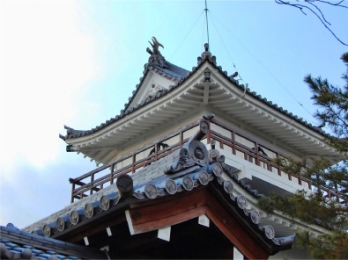
This castle was the home of the powerful Saji family. Ono Castle is located in an important strategic location in the region. It is also known as the first married home of the Oeyo (the mother of Tokugawa Iemitsu). Today a donjon themed viewing platform is at the center of the Shiroyama Park giving a panoramic view of the Suzuka Mountains and Ise Bay.
On the street connecting the Pottery Footpath (Course A) and the INAX Museums, approximately 150 ceramic sculptures (made by directly shaping clay, carving it, and firing it) donated free of charge by artists in the city are displayed, attracting visitors with their humorous expressions.
For a historical walk through Ono Town, we recommend the ‘Owari Ono Town Ancient and Modern Walking Guide.’